
Advertising
Women's Attitudes Toward Contextually Relevant Video Ads
Contextual video ads made women feel more favorably toward both the brand (62%) and the site where they saw the ad (56%).
Read MoreUS Search Ad Spending Growth, Q1 2010-Q2 2012

US paid search spending grew 15.5% year-over-year in Q2, representing a slowdown from Q1’s 30.3% growth rate, per a June report from IgnitionOne.
Read MoreTop 15 Facebook Ad Targeting Options [CHART]
According to Social Fresh, the most common targeting criterion has been age, used either, always or often by 55% of US respondents to a March 2012 survey.
Read MoreAverage CTR For Facebook Marketplace Ads By Country, Q1 2011-Q1 2012
In 2011, major marketers dramatically increased their spending on Facebook, buying up the site’s so-called “Premium” ad inventory—ads on users’ homepages and in other exclusive spots—in a quest to acquire “likes.” This year, some marketers have reduced spending on these Premium ads so they can reassess the ads’ effectiveness. As a result, Facebook has seen…
Read MoreYouTube Campaign Video Length [CHART]

via marketingcharts.com While 33% of the most-engaging YouTube campaigns run under 30 seconds, only 11% of campaigns by volume run that length, per findings from a Yesmail Interactive study [download page] released in June 2012. And although YouTube campaigns rose sharply over the 3-month study period – by about 38% to 80 across all brands…
Read MoreeShoppers Who Have Purchased Due To Facebook Ads or Comments, by Generation [CHART]
via emarketer.com A June 2012 study from Reuters and Ipsos found that only 20% of US Facebook users said they had bought products because of ads or comments they saw on Facebook. Read the rest at eMarketer.
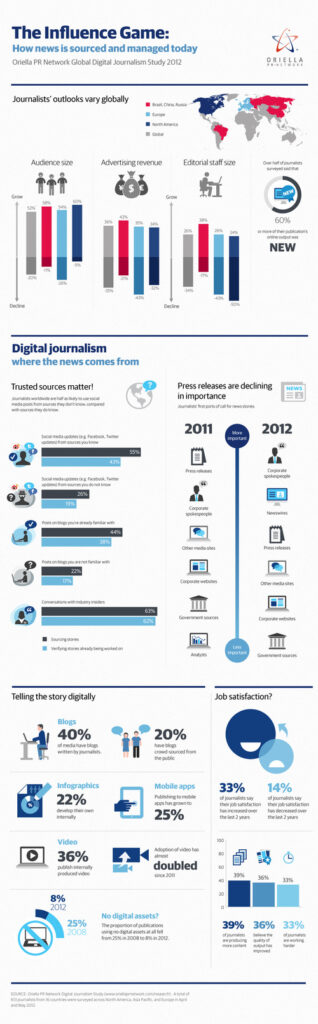
Read MoreGlobal Digital Journalism [INFOGRAPHIC]
via mediabistro.com
Read MoreTV Advertising Influence Wanes With Age [CHART]
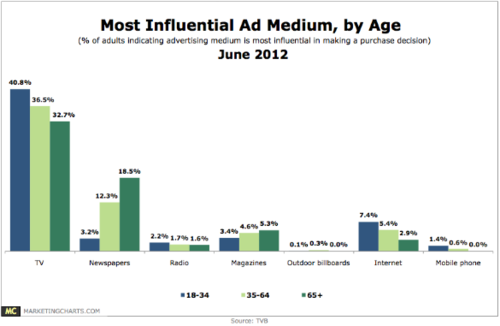
via marketingcharts.com Data from TVB’s “Media Comparisons 2012″ indicates that a plurality of respondents across all age groups believe that TV influences their purchase decisions the most. Interestingly, 18-34-year-olds are the most likely to report this (40.8%), with TV’s influence declining with age, to 36.5% of 35-64-year-olds and 32.7% of those aged 65 and older.…
Read More